From Cologne to New York and Back: What It Really Takes to Work as an Actor in Germany
Jörg Vicent Malotki spent 30 years navigating the German film industry — first from behind the camera, then in front of it. In this Mriia Mentors session, he shares everything Ukrainian actors need to know about self-tapes, casting platforms, showreels, and the mindset that keeps you working.
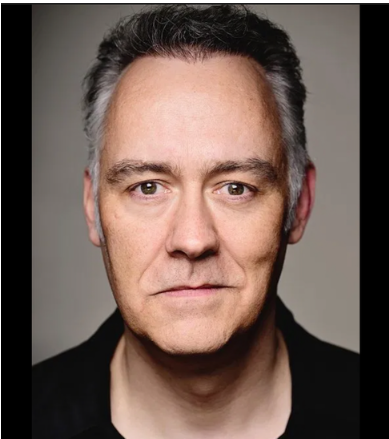
Jörg Vicent Malotki
Actor · Germany · Trained at HB Studio, New York
🇩🇪 German Market
About this session
30+Years in the German film industry
~30KRegistered actors in Germany
3–4%Can live solely from acting
"You are probably the only person who can never truly judge what you do. Develop a thick skin — and stay completely open and vulnerable. On some days, both are possible."
01 · The Beginning
A Camera Operator Who Decided to Switch Sides
Jörg Vicent Malotki didn't start as an actor — he started obsessively watching films. By his teens, he was running a video club at school and shooting stop-motion clay films on a Super 8 camera. In one year alone, before he could even drive, he watched 170 films in cinemas, traveling to neighboring towns to get there.
After school he trained at a small production company in Cologne, working in the camera department. It was there, crouching beside the camera during every take, invisible to the cast but close enough to feel the scene, that something shifted.
"I decided — I don't want to end up where the director is. I want to go to the other side."
— Jörg Vicent Malotki
At 24 or 25, he decided to study acting. German state schools had an age cutoff — he was already too old. So he packed up and moved to New York. His first acting role came through his teacher at HB Studio, whose boyfriend was directing a thesis film at Columbia University. He auditioned, made it to the second round, and got the part — an SS officer in an anti-war film. Professionally shot, rigorously produced. A genuine first break.
02 · Training
What Two and a Half Years at HB Studio in New York Actually Taught Him
Jörg studied at HB Studio (Herbert Berghof Studio) — one of New York's most established acting schools, founded by Uta Hagen, with roots going back over 60 years. He stayed for roughly two and a half years, bartending on the side to pay his way.
The core of the Uta Hagen technique, as Jörg describes it: first, be a human being. The character must not seem aware they are being watched. Real behaviour. Real reactions. No "walking backwards out of the room" because you've done the take 15 times and forgot that in real life you would fall over.
🎭
Chekhov-influenced approach
Much of what's taught in New York acting schools is rooted in Chekhov, who came to the US and influenced an entire generation of teachers.
📖
Recommended book
A Challenge for the Actor by Uta Hagen — the book Jörg read and still recommends, especially for film and TV acting.
03 · The German Market
What Makes Germany Different From Every Other European Market
~30KRegistered actors in Germany
3–4%Can live solely from acting
4Major actor cities
Germany is a decentralized country with four historically important cities for actors: Berlin, Cologne, Hamburg, and Munich. Moving to one city can effectively cut you off from work in others — each city has its own networks and productions.
If you're planning to move to Germany: Berlin is the best starting point. Most projects either originate there or have a strong Berlin presence. Though this shifts year to year based on tax incentives, Berlin currently offers the widest range of opportunities.
Germany is also, by tradition, not a casting country. Historically, actors sent physical tapes, photos, and CVs by post — costing thousands of euros a year. That culture is changing, partly because of self-tapes.
Actors mailed physical VHS tapes, headshots, and CVs to casting directors. Getting your material out cost the equivalent of 25–30 Deutschmarks per submission — multiplied across dozens of contacts, a significant annual expense. Jörg once sent a tape with a broken cassette inside (he'd jumped on it) and was still cast because the casting director liked his photos and CV enough to offer him the role without watching the tape.
The self-tape (or "e-casting" in Germany) has been a genuine equalizer. More actors can submit without geographic or financial barriers. However, it also means casting directors receive far more submissions. Getting seen is easier. Getting noticed requires stronger material.
Jörg says yes, strongly. Having worked as a clapper loader for years meant he already knew everyone on set when he arrived as an actor. He understood what every department was doing, why the AD gave certain calls, why people seemed stressed. It removed the "new kid" anxiety entirely. He recommends: try to get on a professional crew for even a day, in any role, just to observe and understand how it works.
04 · Self-Tapes
The Self-Tape as a Daily Practice, Not a High-Stakes Submission
One of the most practical pieces of advice from this session: stop treating every self-tape as a momentous audition, and start treating it as a muscle you build through daily repetition.
"You shouldn't overthink it. You just make a decision, you go for it. Maybe they like it, maybe they don't. Let it go."
— Jörg Vicent Malotki
He recommended the work of Manuel Puro, a casting director who runs intensive self-tape workshops — including a 7-day and month-long version — where participants submit a self-tape every single day. The forced frequency removes the anxiety of each individual tape. Peer feedback and Zoom review sessions are part of the process.
🎬 Self-Tape Resources Mentioned
→
Manuel Puro — Self-Tape ClassCasting director running 7-day and month-long self-tape intensives. Peer feedback included. In-person Barcelona sessions have been held.
→
Lucy LennoxCasting director mentioned positively by multiple participants. Teaches self-tape and audition technique.
→
Nancy BishopInternational casting director, author of Auditioning for Film and Television. Has run workshops across Europe.
Jörg's Self-Tape Setup Advice
1
Keep your setup permanently ready
Don't move furniture every time you need to tape. Have a dedicated corner. The goal is zero friction between "I need to submit" and actually filming.
2
Technical decisions should be automatic
Lighting, backdrop, audio — solve these once. When you're under time pressure, your mind should be entirely on the performance.
3
Tape your skills, not just acting scenes
Make short videos of every skill you have: languages, sports, instruments, anything. Jörg almost got a TV part because he could stand-up paddle — they needed it and didn't want to teach it.
05 · Showreel
What Goes in Your Reel — and What Gets Cut
Jörg was direct about one of the most common showreel mistakes: keeping scenes you're not good in just because they're from something prestigious.
"If you're not good in it, don't use it. I'd rather you shoot something yourself — maybe not technically great — but where you act well."
— Jörg Vicent Malotki
His advice: your reel should contain scenes you can connect back to your resume. Platforms like Filmmakers.eu let you link individual scene clips directly to the production credit they came from.
✂️
"Kill your babies"
Even scenes you love have to go if they don't serve you. Ask a trusted friend who will be honest — then listen to them.
🌍
Make a skills tape for every language
A short clip of you speaking another language to camera is evidence — not just a line on a CV.
🎯
Quality over name recognition
An unknown production where you shine beats a famous one where your part is tiny and poorly shot.
📎
Tie scenes to credits
On Filmmakers.eu, link your reel clips directly to the production they came from. This is now possible and expected.
06 · Platforms
Where to Register and What It Costs
Jörg was specific about which platforms matter. Importantly, the German actors union pushed through a rule change that means paid and unpaid profiles are treated equally in search results — previously, paying got you ranked higher, which has since been banned.
🖥️ Casting Platforms to Know
→
Filmmakers.euEssential for Germany. Free tier available, shows up equally in search. Tie scenes to credits. Upload skill videos. Start here.
→
eTalentaEuropean/international platform. Recently went non-profit (pricing dropped). Good for cross-border European work.
→
SpotlightUK's primary actor database. If targeting UK work, this is the standard. Currently free for Ukrainian actors for one year — verify with Spotlight directly.
Free tip from Jörg: Register on Filmmakers.eu even on the free tier. The algorithm now surfaces free and paid profiles equally. You can upload photos and even a video clip. Start there before spending money on a premium subscription.
07 · Mindset
On Self-Doubt, Not Being Able to Measure Your Own Work, and Staying Sane
One of the Ukrainian participants asked: how do you handle not being able to measure the quality of your own work? Unlike baking bread, where you can taste and evaluate, acting leaves you with nothing concrete — just a feeling, which is often wrong.
"You need to develop a thick skin — and at the same time, stay completely open and vulnerable. On some days that works."
— Jörg Vicent Malotki
Jörg's response was not reassuring in the comfortable sense — it was honest. After 30 years, he still has self-doubt every few weeks. The difference is he now knows it will pass, and he can even laugh at it.
Trust yourself. After all the preparation, don't push for the result. Let your body and face do what they need to do. Jörg's best on-screen moments were things his face did that he never consciously planned — micro-reactions that happened because he trusted his preparation and wasn't forcing a performance.
Jörg recounted his first TV shoot where the director grabbed his shoulder, told him where to stand and what to say, then walked off without a word. But the director may have been stressed, under pressure from a producer, or simply inept. It probably had nothing to do with Jörg. Assume it's not about you — most of the time, it isn't.
If you haven't reached the level where you can pay someone to do your PR, roughly 90% of your work as an actor is marketing, networking, and maintaining visibility. US actors who feel like your personal friends from social media? That's a skill set, developed early. It can be learned.
08 · Networking
How Networking Works in Germany — and How to Use It
Jörg is part of two actor networks in Germany: the Actors Home (international online community), and a regional WhatsApp-based network for North Rhine-Westphalia. He also emphasises film festivals as a networking tool — not just for showing work, but for practicing the meta-skill of professional visibility.
"Being there sometimes is enough. Being there and having a good time sometimes is enough."
Berlinale TalentsA competitive but prestigious program for emerging international filmmakers and actors. Apply if eligible.
→
The Actors HomeInternational online acting community. Good for cross-border peer connections, advice, and online networking events.
His final point: you may be a great actor but feel awkward at parties. That's fine — acting involves playing characters with lines written for them. But in the real industry, networking is how you find work. Treat it as a skill to develop, not a personality trait you either have or don't.
Join the Next Mriia Mentors Session
Free live Q&A sessions with working actors, directors, and casting professionals from Germany, Spain, the UK, and the US. Open to Ukrainian actors and theatre artists at any stage of their career.