Screenwriting · BBC Development · Structure & Process
Get Your Hero Up a Tree: A BBC Screenwriter's Complete Guide to Writing a Script That Works
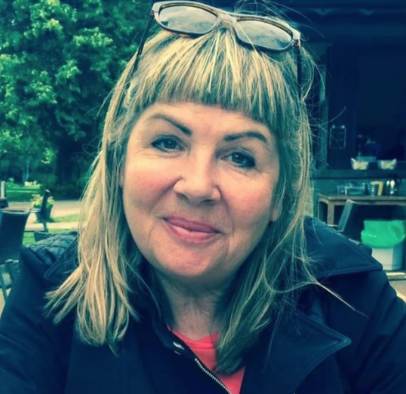
Barbara Jane Mackie devised Dangerfield, script edited Dalziel & Pascoe, and developed Cowboy Girls with Anthony Minghella. She started her career making music videos and managing the early shows of Rik Mayall and Ade Edmondson. In this Mriia Mentors session she gave one of the most practical, honest guides to screenwriting craft we've heard from character to structure to the industry, with no shortcuts.
Barbara Jane Mackie
BBC Screenwriter & Script Editor · Isle of Wight, UK
UK · BBC Craft
About this session
BBCScript editor · Drama producer · Dangerfield, Dalziel & Pascoe
HullStudied Drama alongside Anthony Minghella
4Feature screenplays + 2 musicals + 1 novel
"Get your hero up a tree. Throw rocks at them. Throw bigger and bigger rocks. Then figure out how to get the hero down."
01 · Getting In
She Started as a Receptionist. Then Became a Music Video Director. Then a BBC Drama Producer.
Barbara Jane Mackie grew up in a family steeped in television drama — her father was Philip Mackie, one of Britain's most celebrated television dramatists. Precisely because of that, she spent her twenties deliberately trying to do something different, something that was hers. She ended up directing music videos, running a fringe theatre company, and eventually almost by accident becoming one of the BBC's key drama developers.
She studied Drama at Hull University alongside Anthony Minghella, who would go on to write and direct The English Patient, The Talented Mr Ripley and Cold Mountain. At university she helped form a comedy fringe group with Rik Mayall and Ade Edmondson — the pair who went on to create The Young Ones and found Alternative Comedy. She managed their early shows at the Tramshed Theatre in Woolwich, London.
"Just get in. It almost doesn't matter what job it is. Even if you want to be a writer, get into that world. You're absorbing everything around you — every conversation, every decision, every mistake. That's the real education."
Barbara Jane Mackie
Her first professional job was at a commercials company answering phones, which she hated, but absorbing how a production machine actually works. She progressed to producing documentaries for Channel 4 during the channel's anarchic early years, when it was commissioning from unknown production companies and taking risks nobody else would. She enjoyed it, but still felt she was circling the thing she actually wanted to do.
At around thirty, a neighbour who worked for the BBC mentioned they needed script readers. She took the job — badly paid, but formative. You read scripts, write a synopsis and a report, and tell the editor above you whether it's worth pursuing. You're filtering a flood of material upward. She got so busy with it she was reading for multiple BBC departments simultaneously. After about a year she was offered two positions at the BBC — one in London, one in Birmingham. She chose Birmingham.
On the script reader path: It's one of the most reliable ways into the industry as a writer-adjacent professional. Badly paid, yes. But you're reading enormous quantities of work, developing your analytical eye, and being trusted with real editorial opinions. Several of the most experienced script editors in British television started there.
02 · BBC Script Editor
BBC Birmingham — Where the Real Development Work Happened
At BBC Birmingham, Barbara became a script editor — a role she'd never formally done before, but learned on the job working alongside established BBC writers. The role of a script editor in British television is specific: you're a second pair of eyes on every script, a diplomatic diplomat between the writer's vision and the broadcaster's needs, and a filter that passes the best material upward toward the producers and commissioners who will fund it.
✏️
Reading and assessment
Evaluating scripts and writing detailed feedback. Not just what doesn't work — always leading with what does. Writers can't hear criticism if the positives aren't established first.
✂️
Cutting to length
Scripts need to fit broadcast time. In Final Draft format, one page equals one minute — that's the industry standard. Trimming without losing the story is a genuine craft skill.
📢
Internal lobbying
Fighting your corner for the projects you believe in — saying to the head of drama "this story is worth doing, here's why." A bit like being a political lobbyist, in her words.
📖
Building the Bible
On series, the script editor often maintains the Show Bible — the living document containing every character's backstory, what's happened to date, and where the story is going.
At BBC Birmingham she devised the police drama series Dangerfield, which ran for four seasons on BBC One. She script edited the crime drama Dalziel & Pascoe — the long-running BBC series based on Reginald Hill's novels, which ran for twelve series from 1996 to 2007 and attracted up to ten million viewers at its peak. She also produced the BBC film Bad Company, which won at the Chicago Film Festival.
From script editor she moved to BBC drama producer — her own projects developed with writers she'd worked with, taken through to production. At the BBC this transition was possible because the money was already there. Unlike independent production, a BBC drama producer doesn't have to raise finance — a significant luxury that shapes how you think about the job.
"In the BBC the money is there. You don't have to worry about raising it. That's a luxury most producers in the world don't have. As an independent, you start from the very beginning of the whole thing."
Barbara Jane Mackie
03 · Going Freelance
Leaving the BBC, Finding a Voice, and Learning What Not to Do on a First Script
After her second maternity leave Barbara made a decision: producing was interesting but it wasn't the thing she loved most. Writing was. She had already quietly developed an agent relationship — she'd shown a half-hour comedy script to two people, the second loved it, and representation followed. That foundation gave her the confidence to go freelance.
Her first major freelance commission was Wobble — a six-part comedy drama series set in a sex therapy practice, commissioned by her former BBC boss who wanted something cheap and contained (all interior locations, small cast). Two episodes, storylines, and a Bible were commissioned. It spent years in development, never got made, and is now being sent to the BBC again decades later with new interest. This, Barbara emphasised, is completely normal.
"A very well-known scriptwriter once told me: never throw anything away. That project you can't see a way forward with right now — leave it on the shelf. Crack on with something else. It might come back around."
Barbara Jane Mackie
Her first commissioned screenplay, Mimi, was funded by the European Script Fund. She looks back on it now and can see where the structure collapsed — it started well, carried through to the halfway point, then faltered because she hadn't done a proper scene-by-scene breakdown before writing. It was a classic first screenplay mistake. But it brought her to the attention of Working Title Films and won her a better agent than she'd had before.
Her Western screenplay Cowboy Girls — about two young Irish women crossing America by wagon train in the 1880s, dressed as male cowhands to find work and freedom — was developed with her screenplay mentor Anthony Minghella through his production company Mirage Enterprises. Minghella, who had been her fellow student at Hull University, read the script and was enthusiastic. His quote about it is on her website and CV to this day. He died in 2008, before the film could be made.
04 · Agents & Getting Seen
Who's Your Agent? And What to Do If You Don't Have One
Producers and agents run the business of film and drama. That's the direct truth. If a script arrives from an agent or an entertainment lawyer, it already has a stamp of approval — someone credible has already filtered it. Without that, you're starting from a much harder position.
Barbara is currently between agents and working with an entertainment lawyer — an alternative that carries similar weight with commissioners and Netflix. If you have a strong script and can't get an agent, approaching an entertainment lawyer is a legitimate route. Productions will take the approach seriously.
🔍
Research who you're approaching
Look at who an agent already represents. Find writers you admire on their books. If your work has a similar flavour or genre, that's your entry point. Show you've done the work — a personalised first line matters.
📩
Never send the script cold
Send a description, a logline, and three lines about the story. Ask if you can send the full script. In Hollywood this is legally non-negotiable — they can't accept unsolicited scripts. In the UK it's strongly preferred.
💼
LinkedIn is underused by writers
Producers, commissioners and agents are there. Connect and, if you pay for Premium, you can message them directly. Barbara used it to reach the producer of a period Irish drama and got her script read through a genuine, targeted first message.
🎭
Theatre still works
Agents' assistants cover fringe theatre constantly. A one-person show, a short run, anything you can invite them to see. Agents find writers through performances, not just through the postal slush pile.
Finish the script first. Barbara's most direct piece of advice on agents: don't approach one until your script is genuinely ready. You're asking someone to give their professional reputation to championing your work. A script that still needs a lot of work wastes both their time and yours — and you may not get a second chance with that person.
05 · Structure
Get Your Hero Up a Tree. Then Throw Rocks.
Barbara uses a saying she was given years ago as her anchor for thinking about story structure. It's worth writing down.
"Get your hero or heroine up a tree. Then throw rocks at them. Throw bigger and bigger rocks. The branch they're standing on starts to crack and break. That's your end of Act Two. Then you work out how to get the hero down."
Barbara Jane Mackie
The three-act structure she described applies to feature films and is the underlying shape of most dramatic storytelling in English-language film and television. For a two-hour film, the rough proportions are: Act One 25%, Act Two 50%, Act Three 25%. A 90-minute British film compresses these proportions accordingly.
🌱
Act One — Setup (25%)
Introduce the character in their world. Establish what's normal before it's disrupted. The inciting incident — the thing that kicks off the whole plot — arrives here, around 20–30 minutes in. It changes everything.
⚔️
Act Two — Confrontation (50%)
The protagonist enters an unknown world and starts fighting battles. Bigger and bigger rocks get thrown at them. This is the longest section and the hardest to sustain — the slog of the script, where most first drafts collapse in the middle.
🏁
Act Three — Resolution (25%)
Get the hero down from the tree. How they get down defines the genre — comedy, tragedy, redemption arc. Your ending should be decided before you write anything else. Know where you're going.
❓
Internal vs external antagonist
Sometimes the antagonist is outside the protagonist — a villain, a system, a family. Sometimes they are their own antagonist: Walk the Line is about Johnny Cash standing in his own way. Knowing which your story is shapes everything.
Know your ending before you start. Barbara is emphatic on this — and not just for structural reasons. The ending defines the genre. If your character overcomes and wins, it's a comedy or a success story. If they fail or die, it's a tragedy. That's not a decision you can leave until act three. It's the destination that shapes the whole journey.
TV Series vs Feature Film — The Key Difference
A film is a single story with a clear ending. A TV series is ongoing storylines — characters in a world that keeps generating story rather than resolving it. For a series you need what Barbara calls a Show Bible: the document that contains all character backstories, everything that has happened in the series to date, and where the story is heading. It's a living document, continuously updated, and essential for bringing new writers into an established world. On long-running series, someone on the team is maintaining it every day.
06 · The Writing Process
Her Complete Process — From Character to Scene Breakdown to Dialogue
Barbara is clear that her process evolved significantly over her career. Her early scripts — including her first commissioned screenplay — suffered because she sat down and started writing dialogue too soon. She's now disciplined about the order of operations, which she shared in detail.
1
Start with character — spend real time here
Know your main character completely before you write a word of script. Four or five pages on them: their background, class, education, childhood, what they want, what they're afraid of, what stops them, how they speak, what makes them laugh. Supporting characters too — less detail but still real. This is not optional and cannot be rushed. Expect to spend weeks on this.
2
Know your world
Where does the story take place? What is the specific, textured environment your character inhabits? If you've lived it, use it. If you haven't, research it until you can. An unconvincing world undermines everything built on top of it. Be specific — not "a café in Barcelona" but this particular café, with these particular people, these particular pressures.
3
Know your ending
Decide this before you build the scene breakdown. The ending defines the genre and gives you the destination you're structuring toward. Without it you're building a road with no destination.
4
Write the scene-by-scene breakdown — expect three months
This is the hardest and most important structural work. One small paragraph per scene. No dialogue. Just: what happens, why it matters, how it moves the story forward. Cut and paste endlessly until the shape is right. Most professional writers will spend three to four months on this before touching the script. It is the slog — and if you skip it, the script will collapse.
5
Show the breakdown to others before writing the script
Get trusted feedback on the structure before you invest months writing dialogue. A structural problem is much cheaper to fix at the breakdown stage than in a third draft.
6
Now write the dialogue — and enjoy it
This is the reward for all the preparation. If you know your characters well enough, the dialogue writes itself. You're not thinking about what they'd say — you know. It flows. This is the icing on the cake, and it should feel like that.
"Don't do the dialogue until the very, very end. Resist it. Because it's the real fun stuff. It's the icing on the cake. And you should let it feel like that."
Barbara Jane Mackie
On Final Draft: The industry-standard screenwriting software used across British and American television and film. One page in Final Draft equals one minute of screen time — this is built into the format and is the reason it became universal. A 90-page script is a 90-minute film. Always use it, or transfer your script to PDF so the formatting is locked before you share it.
07 · Research & Story Origins
Write What You Know — Or Go and Know It
Every project Barbara described in this session came from a direct encounter with real life. Not from an abstract idea, but from meeting a person, reading a book, attending a festival, seeing a documentary and thinking: there's a film in that.
The Last Chance Mommas started when she saw an all-female punk tribute band at the Isle of Wight Festival and was struck by how the three lead singers looked glamorous, mid-forties, as if they'd really lived. She tracked them down, met with them, listened to their stories, and heard one of them describe an abusive marriage and a daughter she'd given up at birth. The film's emotional core came from that afternoon in Manchester.
Cowboy Girls started with a book she read about women who went West in the 1880s — young, mostly poor, many of them barely surviving the wagon trains across America. She then researched how Irish immigrants spoke in New York in the 1880s, because it had to sound real. Anthony Minghella noticed.
Rumpy Pumpy — her stage musical, now a commissioned screenplay — came from a Channel 4 documentary about two Women's Institute members, Jean and Shirley, who went on a worldwide search for the perfect legal brothel after seeing sex workers getting into strangers' cars near Southampton. She tracked the real women down and spent time with them. She made it a musical because she wanted everyone — not just those who'd already decided the subject was important — to want to come and see it.
"I always say: write what you know, and start from where you are. But if you're going to write something outside your experience, you have to go and get that experience. Research until you can't be bothered anymore. Otherwise it won't feel real — and if it doesn't feel real, it won't grab anybody."
Barbara Jane Mackie
When she was teaching screenwriting to undergraduates at Portsmouth and Southampton Solent universities, she would encounter students writing stylised crime dramas set in the Bronx — worlds they'd never seen, based on other films rather than life. She made them stop. She asked about their own lives. And every single one of them, once they started talking, had extraordinary material: fractured families, illness, poverty, love, failure, things worth writing about. Write from that. The authenticity is already there.
08 · Industry Realities
What They Don't Tell You About a Career in Screenwriting
⏳
Development takes decades, not years
Wobble was commissioned 25 years ago, never made, and is now going back to the BBC with fresh interest. Scripts sit on shelves. Careers move in non-linear directions. A project that finds no home today may find one in a completely different landscape.
🎰
Commissioners have personal taste — and it's unavoidable
Different executives will love and hate the same script. There is no single correct route to getting things commissioned. The job is partly about finding the right person at the right moment — and that involves luck as well as craft.
📚
A script that doesn't get made is never wasted
Mimi got Barbara a better agent. Cowboy Girls got Anthony Minghella's endorsement. A strong script that doesn't get produced still opens doors, builds credibility, and shapes the next project.
🌍
Channel 4's early years were exceptional — and unrepeatable
In the late 1980s and early 90s Channel 4's mandate was to be different and take risks with unknown companies. That environment was formative for a generation of British filmmakers. It has changed. The current market is more consolidated and risk-averse — understanding the landscape you're actually entering matters.
Yes, for any ongoing drama. A Show Bible is the master document that contains: every character's full backstory, the world of the show in detail, what has happened in the series to date, and where the story is heading. On a soap opera it's enormous and maintained daily. On a limited series it might be 30–40 pages. It's the document that lets any new writer get up to speed quickly, and the script editor often maintains it throughout the run. Creating a Bible is one of the deliverables when you pitch a series — commissioners want to see that you've thought beyond episode one.
In the US, agents and managers have different functions. A literary manager is like the UK agent — they represent you, send your work around, promote you and advise on your career. The US agent comes in at the end to do the deal — they're primarily focused on the contract negotiation. If you want to sell work in the States, you need a US manager first. Barbara is currently pursuing one for her Western screenplay Cowboy Girls.
Barbara has written two musicals and describes the process as "a big journey, something else entirely." The specific challenge is that the music and songs have to carry dramatic weight — they're not decorative, they move the story. Her musical arranger on Cowboy Girls is John Cameron, who arranged Les Misérables and Kes. Her advice: if the story demands it, write it as a musical — don't add songs to a story that isn't one. But it is a format with real commercial appeal, particularly for British comedy drama, and it gives you a reason for audiences to come who might not otherwise engage with difficult subject matter.
Join the Next Mriia Mentors Session
Free live Q&A sessions with screenwriters, producers and industry professionals from the UK, US, Spain and Germany. Open to Ukrainian filmmakers and writers at any stage of their career.